Business Solar Energy: How Solar Power Helps Companies Achieve Sustainable Growth
Sustainability has become a major priority for organizations worldwide. Companies are increasingly expected to reduce environmental impact while maintaining efficiency and long-term profitability. For businesses in Hawaii, where electricity costs are among the highest in the United States, energy management is often the first step toward sustainability.
Traditional electricity generated from fossil fuels contributes to greenhouse gas emissions and exposes businesses to fluctuating energy prices. As a result, many organizations are adopting renewable solutions that provide both environmental and financial benefits. One of the most effective options is business solar energy.
Solar power allows companies to generate their own electricity using sunlight. By installing solar panels and related technologies, businesses can reduce reliance on the utility grid, stabilize energy expenses, and demonstrate a commitment to environmental responsibility.
Many companies adopting solar energy for companies experience several key benefits:
- Lower long-term electricity costs
- Reduced environmental impact
- Greater energy independence
- Improved sustainability reputation
In Hawaii, where sunshine is available year-round, solar for business has become one of the most practical renewable energy solutions for commercial properties.
Why Businesses Are Adopting Solar Energy
Corporate sustainability initiatives often begin with energy improvements. Energy use is one of the largest contributors to operational costs and environmental impact.
By adopting solar power for businesses, companies can generate clean electricity while reducing reliance on fossil fuel-based energy.
Solar energy systems produce electricity without emissions during operation. This helps businesses reduce their carbon footprint and contribute to broader environmental goals.
Commercial solar systems also help companies stabilize long-term energy expenses. Instead of relying entirely on utility electricity rates, businesses generate their own renewable power.
For many organizations, solar adoption supports several strategic goals:
- Reducing energy expenses
- Improving sustainability metrics
- Enhancing brand reputation
- Supporting renewable energy initiatives
Businesses seeking commercial solar solutions often start by exploring technologies such as photovoltaic solar systems, which convert sunlight directly into electricity.
How Business Solar Energy Works
A solar power system for business uses photovoltaic panels to capture sunlight and convert it into electricity.
The system typically includes several components.
Solar Panels
Solar panels absorb sunlight and convert it into direct current electricity. These panels are typically installed on rooftops or ground-mounted structures.
Many companies install solar panels for your business on unused roof space to maximize energy production.
Inverters
Solar panels produce direct current electricity. Inverters convert that electricity into alternating current, which buildings use to power equipment and lighting.
Electrical Integration
Once converted to usable electricity, the solar system connects to the building’s electrical panel. This allows solar energy to power operations directly.
Businesses often combine solar installations with professional electrical services such as commercial electrical upgrades.
Energy Storage
Some companies install battery storage to store excess solar power generated during the day.
These batteries allow businesses to use stored energy at night or during power outages.
Businesses interested in backup power often explore PV storage solutions.
Solar Energy for Small Business
Small businesses can benefit significantly from solar power systems.
Installing solar panels for small business helps reduce electricity costs and improve long-term financial stability.
Because small businesses often operate within tighter budgets, energy savings can make a meaningful difference in operational costs.
Benefits of solar energy for small business include:
- Lower electricity bills
- Reduced exposure to rising energy prices
- Increased property value
- Stronger environmental branding
Many small companies install small business solar panels to offset daytime energy use, which is often when businesses consume the most electricity.
Designing a Solar Power System for Business
Successful solar adoption begins with proper planning and system design.
Solar providers typically follow several steps when designing solar power for small business or larger commercial systems.
Step 1: Evaluate Energy Consumption
Businesses should first review electricity usage. An energy audit helps determine how much electricity the company consumes each month.
Understanding energy usage allows solar professionals to design systems that match operational needs.
Step 2: Assess Solar Feasibility
Not every building is identical, so solar providers evaluate site conditions such as:
- Roof orientation
- Available sunlight exposure
- Structural integrity
- Local regulations
These factors help determine the ideal system size.
Step 3: Develop a Custom Solar System
Engineers design a customized solar power system for business based on the company’s energy profile.
A typical system may include:
- Photovoltaic solar panels
- Inverters and electrical systems
- Monitoring equipment
- Optional battery storage
Businesses may also combine solar with other energy improvements, such as energy-efficient air conditioning systems.
Step 4: Installation and System Integration
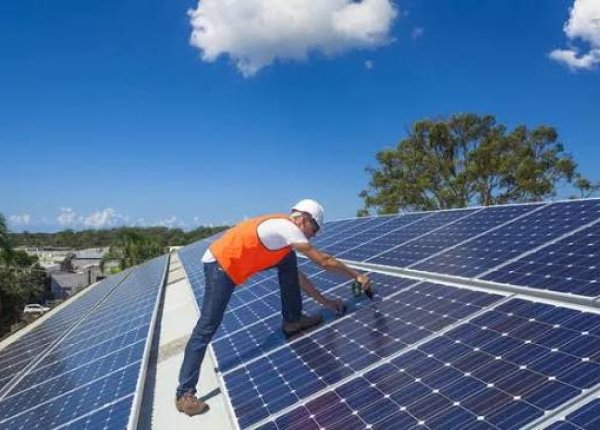
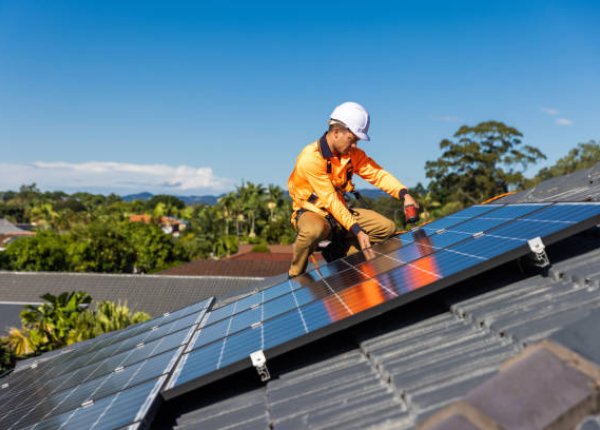
Professional installers mount solar panels and integrate them with the building’s electrical infrastructure.
The installation process typically includes:
- Installing mounting structures
- Connecting panels to inverters
- Integrating the system with the building’s electrical panel
- Testing and commissioning the system
Once installation is complete, the system begins generating electricity immediately.
Additional Solar Energy Solutions for Businesses
Many companies combine solar energy with other energy efficiency upgrades.
Examples include:
Solar Water Heating
Businesses with high hot water demand often install solar water heating systems to reduce electricity consumption.
Electric Vehicle Charging
As electric vehicles become more common, companies may install workplace charging stations.
Solar powered charging stations allow businesses to power EVs with renewable energy. Learn more about electric vehicle charging solutions.
Building Efficiency Improvements
Solar works best when combined with building efficiency upgrades.
Some businesses improve energy efficiency through roofing improvements or insulation upgrades. Commercial roof upgrades can support solar installations and extend system lifespan. Learn more about commercial roofing solutions.
Real World Examples of Business Solar Energy
Commercial solar adoption can benefit businesses across many industries.
Hospitality Industry
Hotels often install solar systems to reduce energy costs related to lighting, air conditioning, and guest services.
Solar power helps hospitality businesses maintain sustainability commitments while reducing operational expenses.
Retail Businesses
Retail stores frequently install solar panels for small business operations to offset daytime electricity consumption.
Solar energy helps reduce operating costs and support environmentally responsible branding.
Industrial Facilities
Manufacturing facilities often require significant energy. Installing solar power for businesses helps reduce electricity expenses and support sustainability initiatives.
Long-Term Benefits of Solar Energy for Businesses
Adopting business solar energy provides long-term advantages for companies.
These benefits include:
Lower Energy Costs
Generating electricity from solar panels reduces reliance on utility electricity, lowering operational expenses.
Environmental Sustainability
Solar energy helps companies reduce greenhouse gas emissions and support renewable energy initiatives.
Energy Independence
Solar systems allow businesses to produce their own electricity and reduce dependence on external power sources.
Improved Brand Reputation
Customers and investors increasingly support companies committed to sustainability.
Solar adoption helps businesses demonstrate environmental responsibility.
Businesses exploring renewable energy trends may also find insights in topics like solar power for tiny homes and renewable living.
Conclusion: Why Solar Power Is a Smart Investment for Businesses
Solar power has become one of the most effective tools for improving corporate sustainability and reducing operational costs.
By adopting business solar energy, companies can generate renewable electricity, lower energy expenses, and strengthen their commitment to environmental responsibility.
For businesses operating in Hawaii, where electricity costs remain high and sunshine is abundant, solar power offers a powerful opportunity to improve both sustainability and financial performance.
Organizations that invest in solar panels for your business position themselves for long-term resilience in an increasingly energy-conscious economy.
Frequently Asked Questions
What is business solar energy?
Business solar energy refers to solar power systems installed on commercial properties to generate electricity for company operations using photovoltaic panels.
How does solar energy benefit companies?
Solar energy reduces electricity costs, lowers carbon emissions, and provides businesses with greater energy independence.
Is solar power good for small businesses?
Yes. Solar energy helps small businesses reduce operating costs while improving sustainability and long-term financial stability.
Can businesses store solar energy?
Yes. Many commercial solar systems include battery storage that stores excess solar energy for use at night or during power outages.
How long do commercial solar panels last?
Most commercial solar panels are designed to last 25 years or longer with minimal maintenance.