Federal credit ended
The 30% federal residential clean energy credit (Section 25D) isn't allowed for expenditures made after December 31, 2025. The IRS treats an expenditure as made when installation is complete.
Source: IRSImportant Hawaiʻi Solar Tax Credit Update
Storm Preparedness
Locally owned solar, battery, and energy services since 1993
Since 1993, Alternate Energy Hawaii has helped local families and businesses lower electric bills, add battery storage, and build reliable energy systems designed for island life.
Powering Hawaii’s Future with Residential Solar and Sustainable Energy
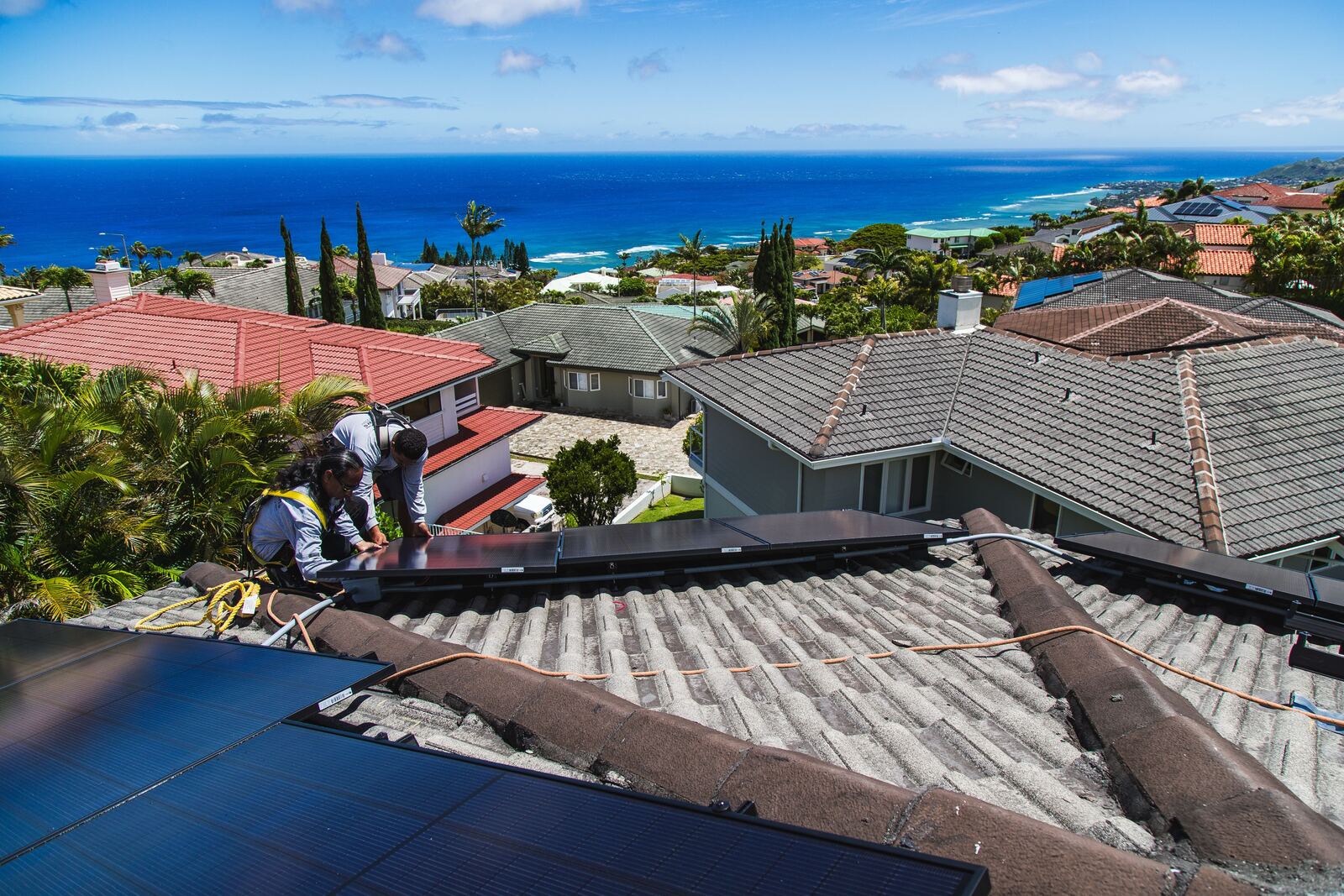
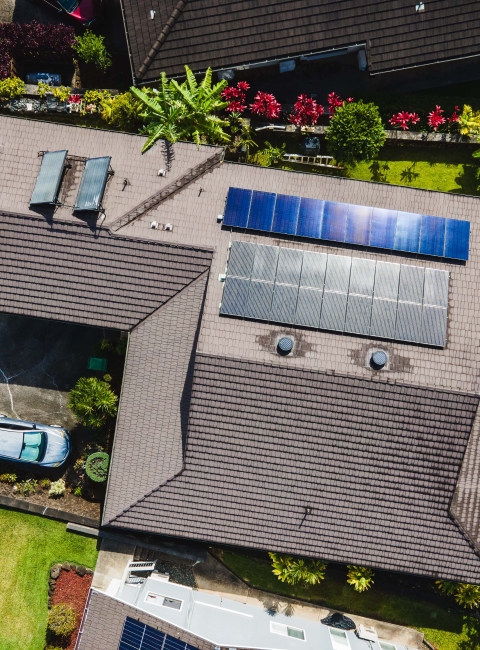
For over 30 years, Alternate Energy has helped Hawaii families and businesses embrace sustainable energy solutions with solar, HVAC, roofing, EV charging, and more—all installed by our in-house team. From photovoltaic panels delivering clean electricity to advanced rooftop energy systems designed for residential solar projects, see how one local team plans the whole system around your roof and your Hawaiian Electric bill.
We offer premium service combined with premium products designed to maximize solar efficiency and deliver reliable clean electricity. Whether you’re exploring residential solar or large-scale commercial solar projects, our tailored approach ensures you get the most value from your investment. With flexible solar financing options, achieving long-term savings and sustainability has never been easier.

Federal and Hawaiʻi solar incentives may help reduce the cost of photovoltaic systems, but incentive programs and eligibility requirements can change over time. Alternate Energy Hawaii recommends consulting a qualified tax professional regarding your specific situation.

Mitsubishi Split Ductless AC systems are up to 40% more efficient than traditional HVAC systems.

In Hawaii, up to 40% of the average family’s electric bill goes toward heating water.

Let our in-house team of licensed electrical journeymen handle your next repair or renovation.
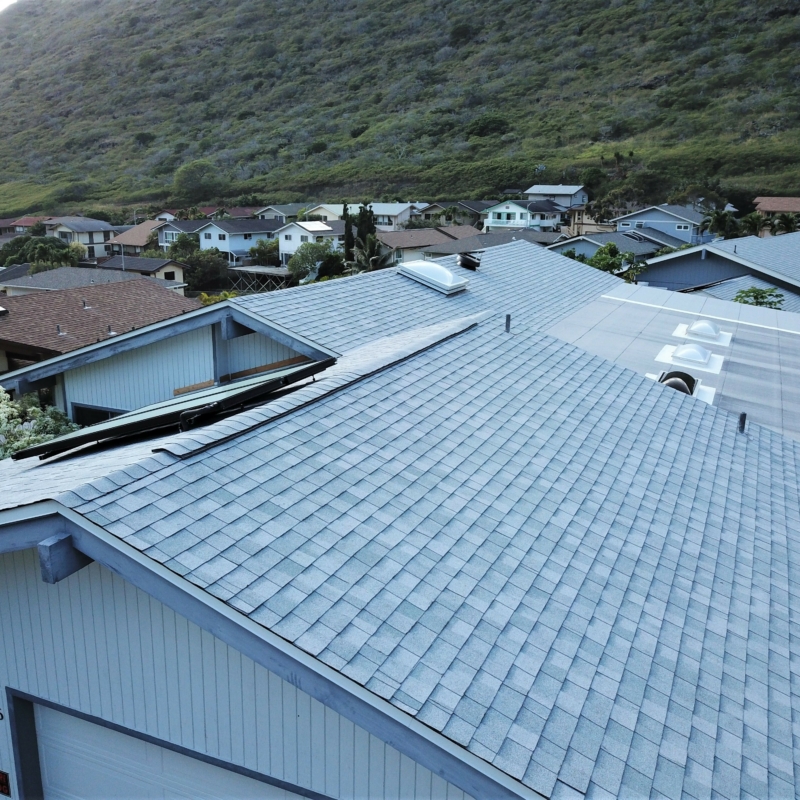
We are a certified 5-Star CertainTeed installer!

Let AEI's experienced electrical journeymen install your EV charging station.
Trusted by Local Families
At Alternate Energy, customer satisfaction is at the heart of everything we do. Read real stories from homeowners who trusted us for their solar, PV, and AC needs — and see the difference quality service, expert installation, and great value can make.
See all storiesWe’re an Oʻahu solar company working from Pearl City. Our own crews install solar panels and batteries across the island, from Honolulu to the North Shore and the Windward side.
See What’s Powering the Change
Our Accreditations and Industry Partnerships





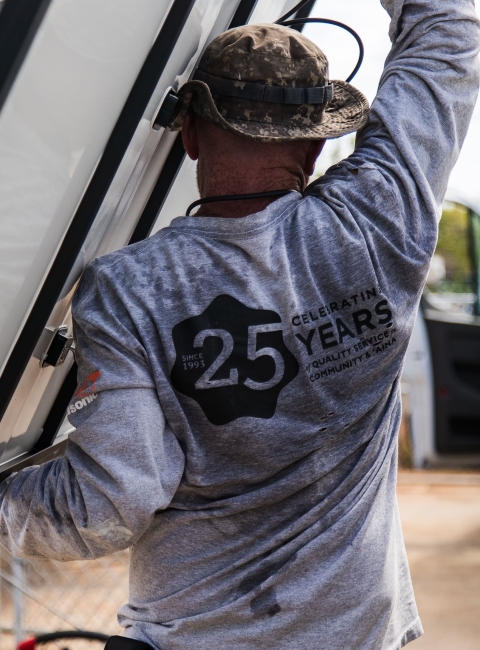
Alternate Energy, Inc., doing business as Alternate Energy Hawaii (AEI), is a family-owned Oʻahu solar and energy contractor founded in 1993 by the Ekimura family and led by founder and president Bruce Ekimura. We have installed more than 59 MW of solar, and every installer is an AEI employee.
Our office is at 96-1276 Waihona Street, Suite 114, Pearl City, HI 96782, open Monday to Friday, 7:30 a.m. to 3:30 p.m. Tesla promoted AEI to Premier Installer in December 2023, and Panasonic named us its 2023 Residential Installer of the Year. Read why Oʻahu homeowners choose AEI or meet the team.
The right solar company depends on your roof, your Hawaiian Electric program and your budget. Start with checks anyone can verify: an active Hawaii contractor license, employee installers, years of local installs and a public BBB record. Then compare written proposals from at least three Hawaii solar companies, including us.
| Check | Why it matters | Alternate Energy Hawaii |
|---|---|---|
| Active Hawaii contractor license | Required for the work; you can verify it yourself | License C-26041 |
| Who installs | Employees answer to the company that sold you the system | AEI employees, no subcontractors |
| Years installing on Oʻahu | Long track record with HECO rules, permits and island roofs | Since 1993; 59+ MW installed |
| Manufacturer standing | Shows training and support from the equipment maker | Tesla Premier Installer; Panasonic 2023 Residential Installer of the Year |
| Reputation you can read | Complaints and responses are public | BBB A+, accredited since 2010 |
| Support after install | Monitoring, batteries and HECO programs change over 25 years | Local support line: (808) 380-6845 |
Our guide to comparing solar companies in Hawaii lists the questions to ask each installer, and local vs national solar companies covers the trade-offs.
The 30% federal residential clean energy credit (Section 25D) isn't allowed for expenditures made after December 31, 2025. The IRS treats an expenditure as made when installation is complete.
Source: IRSAct 24 (SB 3125), signed May 21, 2026, puts a $40 million annual cap on Hawaii's Renewable Energy Technologies Income Tax Credit and ends the credit after the 2029 tax year.
Source: Act 24Executive Order 26-02 (signed June 8, 2026) and TIR 2026-02 explain the cap exemption. Systems placed in service before May 21, 2026 are exempt; others may qualify through certification.
Source: TIR 2026-02Hawaiian Electric's BYOD Plus pays $400 per kW of committed battery capacity upfront for new batteries paired with solar, plus $400 per kW for qualifying low- to moderate-income customers.
Source: Hawaiian ElectricEvery household's tax situation is different, so check your eligibility with a tax professional.
Proof you can verify
Started by the Ekimura family in 1993.
Look it up in the state's licensing search.
Every installer is an AEI employee, not a subcontractor.
Promoted by Tesla in December 2023.
Awarded by Panasonic in December 2023.
Accredited since October 2010; BBB lists the business as started in 1993.
We wanted to get our electricity from the sun, not the electric company. Jeff Lee was professional, straightforward, and still answered our questions months after the install. Our electric bill has gone way down, and we've been recommending AEI to all our friends.
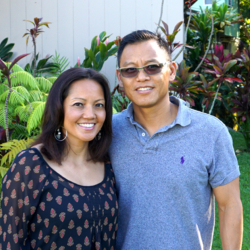 The Lee FamilyFull review
As a former contractor, I appreciated that AEI focused on product quality, not just financing. Jeff Lum was informative and professional, and the installation went perfectly. With my condition, we rely on AC every day, so saving on our bill has made a real difference.
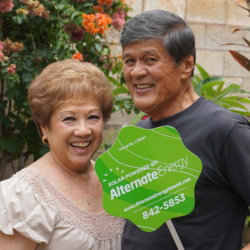 The Antonio FamilyFull review
Even with the AC running all day and night, our electric bill went down. Roy was incredibly responsive. It didn't feel like talking to a sales rep, it felt like talking to family.
 The Matsumoto FamilyFull review
We had a great experience with AEI. Dave Thompson helped us understand our options, the tax credits, and the whole installation process. We went with AEI because everything, panels and all, was Mitsubishi. We've already referred four friends.
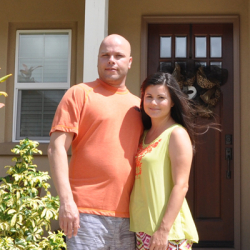 The Benros FamilyFull review
AEI made everything simple and easy to understand. Our monthly bill dropped, and I was so impressed I recommended them to my parents. We're already planning to add more panels.
 The Adams FamilyFull review
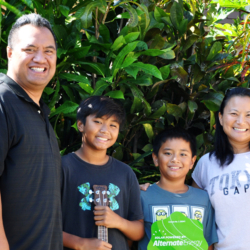
Our electric bill dropped, even after adding two AC units. Thanks to AEI and Roy's help, we finally had the freedom to enjoy things like paddle boarding as a family.
 The Vaeena FamilyFull review
Every recommendation starts with your roof, your Hawaiian Electric account and what you want the system to do.
Hawaii contractor license C-26041, BBB accredited with an A+ rating, and certified by the manufacturers whose equipment we install.
Read our BBB profile →Tell us about your home or business, your electric bill and whether you want battery backup. We'll recommend a system for your roof and give you a written estimate.
We install solar panels, battery storage, Tesla Powerwall, solar water heating, roofing, Mitsubishi ductless AC, EV chargers and electrical work for Oʻahu homes and businesses. One local team covers the roof, the panels, the battery and the wiring, so each part is planned around the others.
Something broken on an existing system? Go to solar repair or call our PV tech support line at (808) 380-6845.
For owner-occupied homes: system sizing, panel and inverter choice, permits and Hawaiian Electric interconnection, all handled by one team.
Learn more →Keep the fridge, lights and Wi-Fi on in an outage, or store daytime solar for the evening. Works with new or existing solar.
Learn more →Powerwall design and installation from a Tesla Premier Installer, including whole-home or essential-loads backup.
Learn more →Heat water with the sun instead of an electric tank. We install new systems and replace aging ones.
Learn more →Replace an aging roof before panels go on, so you aren't removing and reinstalling solar a few years later.
Learn more →Efficient split AC sized for Hawaiʻi heat, planned alongside your solar so the system can carry the extra load.
Learn more →Home EV charger installation with the circuit and panel work done by our own licensed electricians.
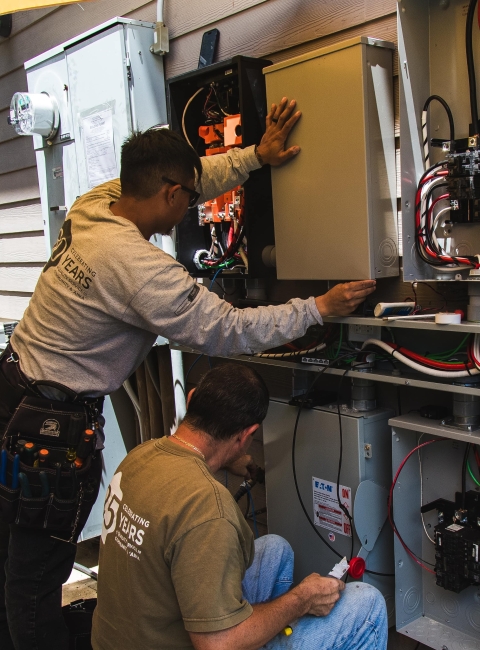
Learn more →Panel upgrades, repairs and the wiring that solar, batteries, AC and EV chargers depend on.
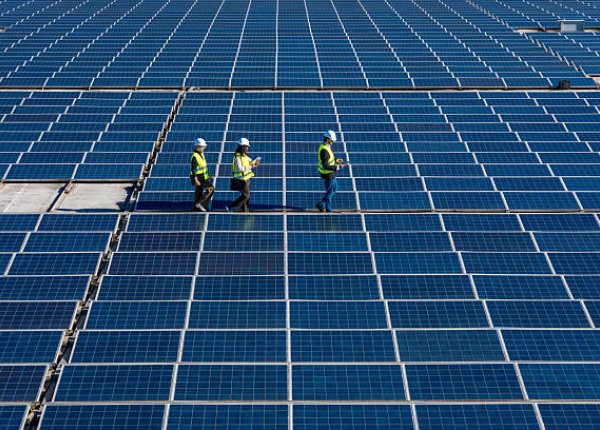
Learn more →Solar and storage for offices, warehouses, retail and other business roofs on Oʻahu.
Learn more →Monitoring checks, cleaning and service to keep an existing system producing.
Learn more →Hawaii has the highest average electricity price of any state (U.S. EIA), which is why so many homes here have solar panels. The question isn't whether the sun is strong enough. It's how big the system should be, which Hawaiian Electric program it connects under, and whether a battery makes sense for your home.
For home systems, see residential solar in Hawaii and photovoltaic solar panels. For prices, read what solar costs in Hawaii and solar financing options.
Every AEI solar panel system starts with your roof and your bill:
We size the system from your Hawaiian Electric bills, not a generic number.
We check its age, layout and shade. If it needs replacing first, our roofing crew can do that before the panels go on.
Salt air near the coast, trade-wind rain and storms all affect equipment choice, racking and how often panels need a maintenance check.
Your Hawaiian Electric program decides how the system exports or stores solar, so we check whether a battery fits before we design. We handle the paperwork.
Alternative energy is power from sources other than fossil fuels such as oil, coal and natural gas. In Hawaii that mostly means solar, wind, geothermal, hydropower and bioenergy. State law requires Hawaii's utilities to reach 100% renewable electricity by 2045 (Act 97, 2015), and rooftop solar is the part homeowners control.
Alternative solar options for a home usually come down to three choices: solar panels alone, solar panels with a battery, or solar water heating. We install all three, and our battery storage guide explains when adding a battery makes sense.
| Alternative energy source | How Hawaii uses it | What AEI installs |
|---|---|---|
| Solar photovoltaic (PV) | Rooftop systems on homes and businesses, plus utility-scale solar farms | Home and commercial solar panels |
| Battery storage | Stores daytime solar for evening use and outages | Tesla Powerwall and other home batteries |
| Solar thermal | Heats household water with sunlight | Solar water heating systems |
| Wind, geothermal, hydro, bioenergy | Utility-scale generation on several islands | Not installed by AEI |
Tell us about your roof, your Hawaiian Electric bill and whether you want backup power. We visit, measure and recommend a system in writing.
Our team designs the system, pulls permits and handles the Hawaiian Electric interconnection paperwork.
Our own crews install, then stay your contact for monitoring questions, maintenance and later add-ons like a battery or EV charger.
The full process is on getting started with solar. Already an AEI customer? Go to support.
Alternate Energy, Inc. is a family-owned Oʻahu company. It was founded in 1993 by the Ekimura family and is led by founder and president Bruce Ekimura. The office is in Pearl City, and the installers are AEI employees, so the company that sells your system also installs and services it.
Alternate Energy installs residential and commercial solar panels, battery storage including Tesla Powerwall, solar water heating, roofing, Mitsubishi ductless air conditioning, EV chargers and electrical work on Oʻahu. One in-house team handles all of it, so a new roof, solar array, battery and AC upgrade can be planned as one project.
The best solar company for you is the one that fits your roof, your Hawaiian Electric program and your budget. Shortlist companies with an active Hawaii contractor license, their own employee installers, a readable BBB profile and years of local installs, then compare written proposals from at least three of them.
Look up the contractor's license on the state's licensing search, ask whether employees or subcontractors will do the install, and ask who answers when monitoring stops reporting. Compare system size, equipment, warranties, battery options and total price in writing. Alternate Energy holds Hawaii license C-26041 and uses its own crews.
It depends on your bill, roof and taxes. The 30% federal credit no longer applies to home systems finished after 2025, and Hawaii's state credit now has an annual cap. Hawaiian Electric's BYOD Plus still pays $400 per kW of committed battery capacity. A site visit shows what a system would do for your home.
Alternative energy is power from sources other than fossil fuels such as oil, coal and natural gas. In Hawaii that mostly means solar, wind, geothermal, hydropower and bioenergy. For a home or business, rooftop solar panels with battery storage and solar water heating are the most common ways to use it.
Built for Hawaii Since 1993
AEI brings solar, battery storage, roofing, electrical, AC, and EV charging together under one local team, so your energy project can be planned around Hawaii utility rates, HECO requirements, roof readiness, and long-term island support.
Solar, batteries, roofing, electrical, AC, and EV charging work together. AEI helps homeowners and businesses avoid disconnected decisions by planning the whole energy system.
Battery backup and energy independence planning help Hawaii families decide what should stay powered when the grid is down, from refrigeration and lighting to critical home circuits.
After installation, local support matters. AEI helps customers understand monitoring, maintenance, battery settings, and next steps if equipment needs attention.
Solar incentives, tax credits, HECO programs, and financing options can change. AEI helps customers compare practical paths before committing to a system design.
Buyer Confidence
AEI provides local support for system questions, monitoring concerns, maintenance direction, and future upgrades. A solar project should not end when the panels turn on, especially in Hawaii where batteries, HECO programs, and utility rules can affect long-term performance.
Monitoring interruptions can come from internet changes, equipment communication issues, or inverter/battery settings. AEI customers can contact support so the team can help identify whether the issue is connectivity, settings, or equipment that needs service.
A solar-ready roof should have enough remaining life, clear usable space, and a structure suited for the proposed system. AEI can evaluate roof readiness and connect solar planning with roofing and electrical considerations before installation.
Battery timing depends on outage concerns, budget, HECO program availability, and how much backup power you want. Some homes benefit from designing solar and battery together, while others may plan battery readiness for a future phase.
A local installer understands island weather, utility requirements, roof conditions, permitting timelines, and local support expectations. Those details matter when comparing a Hawaii-based energy team with a national sales-first provider.
Solar projects typically require design review, permitting, utility coordination, and inspection before final operation. Timelines can vary by project and program, so customers should ask each installer how they manage permitting and HECO interconnection steps.